If you’ve seen both targetted and targeted, you might wonder which one is correct. The confusion usually comes from British vs American spelling patterns and whether to double the t when adding -ed. It’s a common mistake, especially in marketing, business writing, and everyday English.
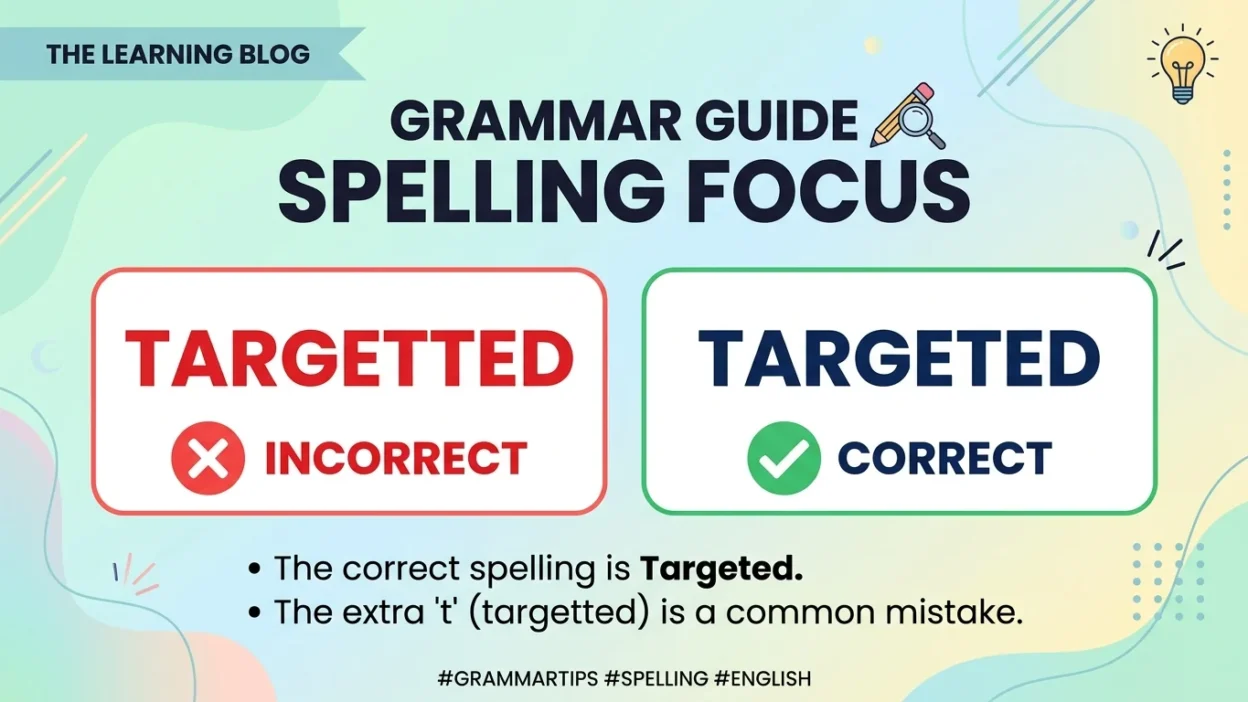
The short answer: targeted is the correct and standard spelling. Targetted is generally considered incorrect in modern usage. This guide explains targetted vs targeted, meaning, examples, rules, and when to use each.
Quick Answer: Targetted or Targeted
- Targeted ✅ Correct spelling
- Targetted ❌ Incorrect spelling (generally avoided)
- Use targeted in both American and British English
- Works for past tense and adjective forms
Example:
- The campaign targeted young audiences.
- They launched targeted ads.
What Does “Targeted” Mean?
Targeted is the past tense and adjective form of target, meaning aimed at a specific group, person, or goal. It’s commonly used in marketing, advertising, business, and everyday communication.
Common Uses of “Targeted”
- Targeted marketing
- Targeted ads
- Targeted audience
- Targeted approach
- Targeted campaign
Examples of “Targeted” in Sentences
- The company targeted new customers.
- They ran targeted social media ads.
- The policy targeted small businesses.
- She targeted the right audience.
- The email was targeted to subscribers.
In each example, targeted means aimed at something specific.
Why “Targetted” Is Incorrect
Targetted adds an extra t, which is unnecessary. English spelling rules don’t require doubling the final t when adding -ed to target.
Correct:
- target → targeted
Incorrect:
- target → targetted ❌
Targetted vs Targeted Comparison
| Word | Correct? | Usage | Notes |
|---|---|---|---|
| Targeted | ✅ Correct | Modern English | Standard spelling |
| Targetted | ❌ Incorrect | Avoid | Extra “t” unnecessary |
Always use targeted.
Spelling Rule Explained
When adding -ed to verbs ending in -et, you usually do not double the final letter unless stress rules apply. In target, the stress is on the first syllable, not the last.
Tar-get → stress on tar
Because the stress isn’t on the last syllable, you don’t double the t.
Similar examples:
- Market → Marketed
- Budget → Budgeted
- Ticket → Ticketed
- Target → Targeted
Common Mistakes People Make
Mistake 1: Doubling the T
Incorrect: The campaign targetted users.
Correct: The campaign targeted users.
Mistake 2: Assuming British English Uses Double T
Some words differ (like travelled), but targeted stays the same in both US and UK English.
Mistake 3: Mixing With “Travelled” Rule
People think:
- travel → travelled
So: - target → targetted ❌
But target doesn’t follow that pattern.
Easy Trick to Remember
Use this quick memory trick:
Market → marketed
Target → targeted
Both follow the same pattern no double t.
Another trick:
One target = one T
Real-Life Examples
Marketing Context
- They launched targeted advertising.
- The brand used targeted messaging.
Business Context
- The strategy targeted small companies.
- We need targeted improvements.
Technology Context
- The app shows targeted recommendations.
- AI delivers targeted results.
Education Context
- Teachers use targeted instruction.
- The program targeted struggling students.
American vs British English
There is no difference between American and British English.
Both use:
- Targeted ✅
- Targetted ❌
Unlike:
- traveled / travelled
- labeled / labelled
The word targeted stays the same everywhere.
Related Forms of “Targeted”
- Target
- Targeting
- Targeted
- Targets
- Target audience
- Target market
Examples:
- They are targeting users.
- The targeted campaign worked.
- The target audience responded.
Frequently Asked Questions
Is targetted correct spelling?
No. Targetted is incorrect. Use targeted.
Is it targeted or targetted UK?
In UK English, the correct spelling is still targeted.
Why isn’t target double t?
Because the stress is on the first syllable: TAR-get.
Is targeted American or British spelling?
Both. It’s the same worldwide.
What is the past tense of target?
Targeted.
Is targeted an adjective?
Yes. Example: targeted ads.
Why do people write targetted?
They confuse it with words like “travelled.”
Which spelling should I always use?
Always use targeted.
Summary:
The difference between targetted or targeted is simple: targeted is the correct spelling, and targetted is incorrect. The word targeted means aimed at a specific audience, goal, or group, and it’s widely used in marketing, business, and everyday writing. The extra t in targetted is unnecessary and doesn’t follow English spelling rules.
To avoid mistakes, remember that targeted follows the same pattern as marketed and budgeted. There’s no difference between American and British English, so you can confidently use targeted everywhere. Sticking to the correct spelling keeps your writing clear, professional, and polished.
Actionable takeaway:
Always write targeted with one t before -ed. Avoid targetted in all modern writing.