
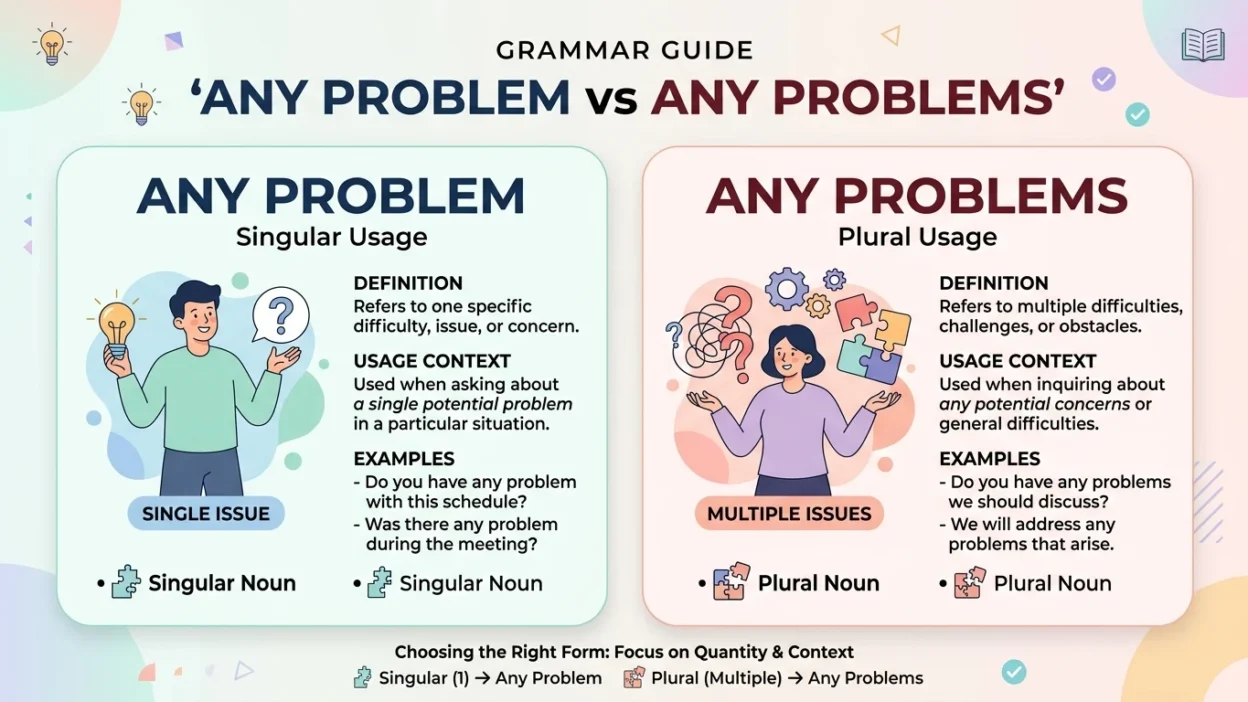
If you’ve ever paused between any problem and any problems, you’re not alone. Both phrases are correct but they’re used in different situations depending on meaning and tone.
Let’s make it simple so you can choose the right one every time.
Quick Answer: Any Problem or Any Problems
- Any problem ✅ Correct (singular, often informal or specific)
- Any problems ✅ Correct (plural, more natural and common)
- Use any problems in most everyday situations
Example:
- Do you have any problems?
- If there is any problem, let me know.
When to Use “Any Problems”
Any problems (plural) is the most common and natural choice, especially in questions and general situations.
It suggests:
- More than one possible issue
- A general check
Examples of “Any Problems”
- Do you have any problems?
- Let me know if you face any problems.
- Are there any problems with the system?
- If you have any problems, contact support.
Think: general situations → plural
When to Use “Any Problem”
Any problem (singular) is used when:
- Referring to one possible issue
- Speaking more formally or conditionally
Examples of “Any Problem”
- If there is any problem, call me.
- Without any problem, the process will continue.
- In case of any problem, report immediately.
Think: specific or formal → singular
Any Problem vs Any Problems Comparison
| Phrase | Usage | Tone | Example |
|---|---|---|---|
| Any problem | Singular | Formal / specific | If there is any problem |
| Any problems | Plural | Natural / common | Do you have any problems? |
Key Difference Explained Simply
- Any problems = general, natural, common
- Any problem = specific or formal
Example:
- Do you have any problems? ✅
- If there is any problem, call me. ✅
Easy Trick to Remember
Use this simple rule:
👉 Asking generally → any problems
👉 Talking about one possible issue → any problem
Common Mistakes People Make
Mistake 1: Using Singular in Questions
Less natural: Do you have any problem?
Better: Do you have any problems?
Mistake 2: Using Plural in Formal Conditions
Less precise: If there are any problems, call me.
Better: If there is any problem, call me.
Mistake 3: Ignoring Tone
Plural sounds more natural in everyday speech.
Real Life Examples
Everyday Conversation
- Do you have any problems?
- Let me know if there are any problems.
Formal Instructions
- In case of any problem, inform the manager.
Work Context
- If you encounter any problems, report them.
American vs British English
There is no difference:
- Any problem ✅
- Any problems ✅
Both are used in American and British English.
Similar Patterns
- Any issue / Any issues
- Any question / Any questions
- Any concern / Any concerns
Plural is usually more natural in general questions.
Frequently Asked Questions
Which is correct any problem or any problems?
Both are correct.
Which is more common?
Any problems is more common.
When should I use any problem?
In formal or conditional sentences.
Is any problems informal?
It’s natural and widely used.
Can I use any problem in questions?
You can, but it sounds less natural.
Which sounds better in speech?
Any problems.
Are they interchangeable?
Sometimes, but context matters.
How do I remember the rule?
Plural for general, singular for specific.
Summary
The difference between any problem or any problems comes down to context and tone. Any problems is more natural and commonly used in everyday questions and conversations, while any problem is often used in formal or conditional statements when referring to a single possible issue.
To sound natural and clear, use any problems in most situations, and switch to any problem when you’re speaking more formally or specifically.
Actionable takeaway:
Use any problems for everyday use and any problem for formal or specific cases.