If you’ve ever paused while writing introduction to or introduction of, you’re not alone. Both phrases are correct, but they’re used in different situations—and choosing the wrong one can make your sentence sound unnatural.
The key difference is simple: one is used when presenting or explaining something, and the other is used when naming or identifying what is being introduced.
Quick Answer: Introduction To or Introduction Of
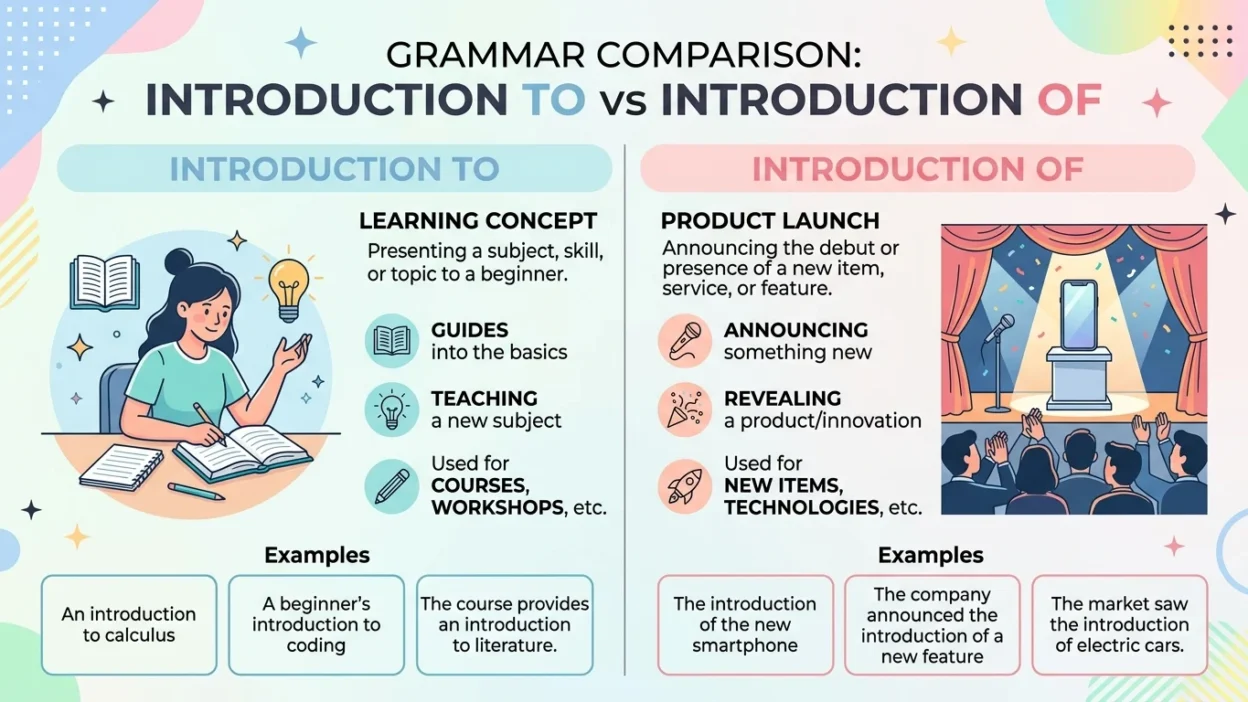
- Introduction to → presenting, explaining, or becoming familiar with something
- Introduction of → the act of bringing something into use or naming what is introduced
- Both are correct, but used differently
Example:
- This is an introduction to grammar.
- The introduction of new rules caused confusion.
What Does “Introduction To” Mean?
Introduction to is used when talking about:
- Learning something new
- Presenting a subject
- Becoming familiar with a topic or person
Think: to = toward something new
Common Uses of “Introduction To”
- Introduction to a subject
- Introduction to a course
- Introduction to a person
- Introduction to a concept
Examples of “Introduction To”
- This book is an introduction to English grammar.
- She gave me an introduction to her team.
- The course is an introduction to programming.
- That was my first introduction to the company.
What Does “Introduction Of” Mean?
Introduction of is used when talking about:
- The act of bringing something new
- Announcing or presenting something officially
- Referring to what is being introduced
Think: of = about the thing introduced
Common Uses of “Introduction Of”
- Introduction of a product
- Introduction of a policy
- Introduction of a law
- Introduction of a feature
Examples of “Introduction Of”
- The introduction of new technology changed everything.
- The introduction of the policy was controversial.
- The introduction of the product was successful.
- The introduction of new rules improved safety.
Introduction To vs Introduction Of Comparison
| Phrase | Meaning | Usage |
|---|---|---|
| Introduction to | Learning or presenting | Subjects, people |
| Introduction of | Bringing something new | Products, policies |
Key Difference Explained Simply
- Introduction to = learning or presenting something
- Introduction of = bringing something into existence or use
Example:
- An introduction to marketing (learning)
- The introduction of a new product (launch)
Common Mistakes People Make
Mistake 1: Using “Of” for Learning Context
Incorrect: An introduction of English grammar
Correct: An introduction to English grammar
Mistake 2: Using “To” for Launching Something
Incorrect: The introduction to a new policy
Correct: The introduction of a new policy
Easy Trick to Remember
Use this simple trick:
👉 To = toward learning or meeting
👉 Of = about something being introduced
Or:
- To → direction
- Of → ownership or subject
Real Life Examples
Education
- Introduction to biology
- Introduction to coding
Business
- Introduction of a new product
- Introduction of a pricing model
Social Context
- He gave me an introduction to his friend
American vs British English
There is no difference:
- Introduction to ✅
- Introduction of ✅
Both are used the same way.
Frequently Asked Questions
What is the difference between introduction to and introduction of?
“To” is used for learning or presenting. “Of” is for bringing something new.
Which is correct introduction to or introduction of?
Both are correct depending on context.
Can I say introduction of a subject?
No. Say introduction to a subject.
Can I say introduction to a product?
Usually no. Say introduction of a product.
Is introduction to more common?
Yes, especially in education.
Is introduction of formal?
Yes, it’s often used in formal or business contexts.
How do I remember the difference?
To = learning, Of = launching
Are they interchangeable?
No, they have different meanings.
Summary
The difference between introduction to or introduction of depends on context. Introduction to is used when presenting or learning about something, while introduction of is used when something new is being brought into use or officially presented.
To use them correctly, remember this simple rule: use introduction to for subjects, people, or learning, and use introduction of for products, policies, or new ideas being introduced.
Actionable takeaway:
Use introduction to for learning and introduction of for launching something new.