If you’re unsure whether to say I didn’t do nothing or I didn’t do anything, you’re not alone. This is one of the most common grammar questions in English, and the confusion usually comes from something called a double negative.
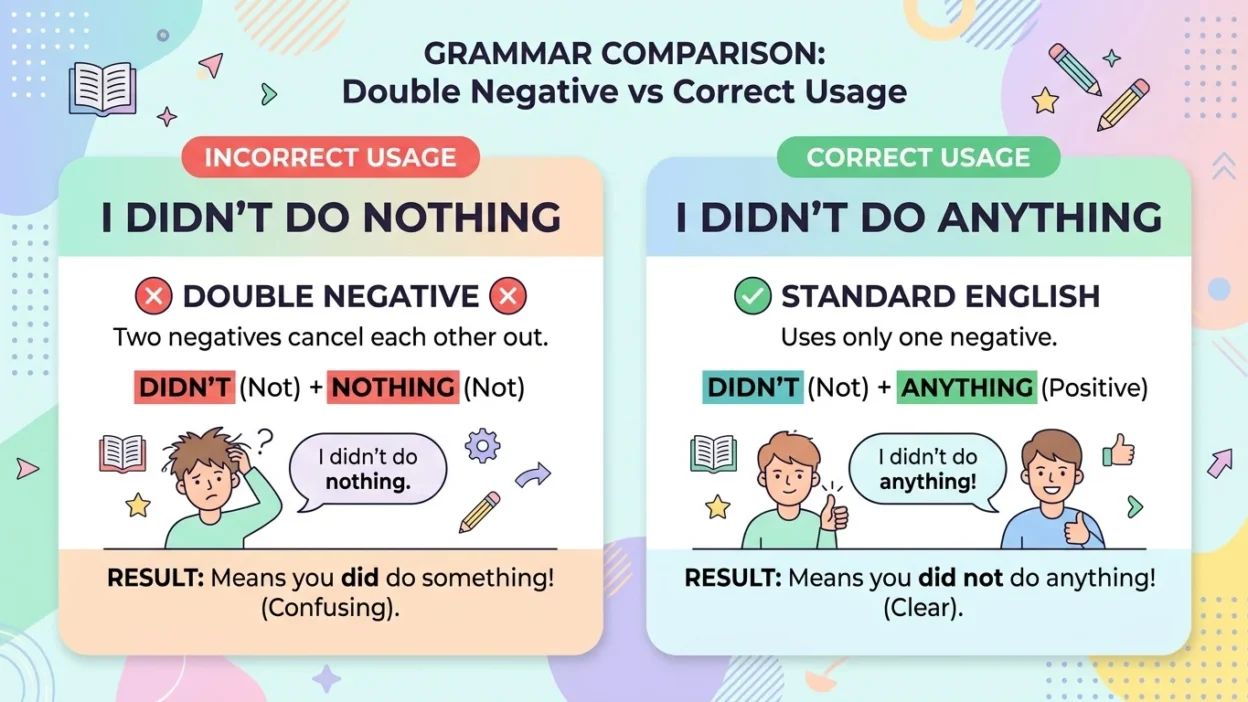
The short answer is simple. In standard English, I didn’t do anything is correct. The phrase I didn’t do nothing is considered nonstandard or informal, though it appears in some dialects and casual speech.
Quick Answer I Didn’t Do Nothing or I Didn’t Do Anything
- I didn’t do anything correct in standard English
- I didn’t do nothing nonstandard or informal
- Use anything after a negative verb like didn’t
Example:
- I didn’t do anything wrong.
- I didn’t do nothing wrong informal or dialect
Why I Didn’t Do Anything Is Correct
In standard English, we usually use one negative per sentence. The word didn’t is already negative, so we need a nonnegative word like anything.
Correct structure:
- didn’t plus anything
Example:
- I didn’t do anything.
- She didn’t say anything.
- We didn’t see anything.
This keeps the sentence clear and grammatically correct.
Why I Didn’t Do Nothing Is Considered Incorrect
The sentence I didn’t do nothing contains two negatives:
- didn’t
- nothing
In standard grammar, two negatives cancel each other out and can create confusion or an unintended meaning.
Technically, it can sound like:
- I did something
That’s why it’s avoided in formal writing and standard speech.
What Is a Double Negative
A double negative happens when two negative words are used in the same clause.
Common negative words:
- not
- no
- nothing
- nobody
- never
Example of double negative:
- I didn’t see nothing
Better: - I didn’t see anything
Comparison Table
| Sentence | Correct | Usage |
|---|---|---|
| I didn’t do anything | Yes | Standard English |
| I didn’t do nothing | No | Informal or dialect |
When You Might Hear I Didn’t Do Nothing
Even though it’s not standard, you may hear I didn’t do nothing in:
- Casual conversations
- Regional dialects
- Songs and movies
- Emphatic speech
In these contexts, it’s often used for strong emphasis, not grammar accuracy.
Example:
- I didn’t do nothing means I really did nothing in informal speech
Easy Rule to Remember
Use this simple rule:
If the sentence already has a negative verb like didn’t, don’t add another negative word like nothing.
So:
- didn’t plus anything correct
- didn’t plus nothing incorrect
More Examples
Correct Sentences
- I didn’t eat anything.
- She didn’t call anyone.
- They didn’t find anything.
Incorrect in Standard English
- I didn’t eat nothing
- She didn’t call nobody
- They didn’t find nothing
Alternatives You Can Use
Instead of repeating negatives, you can say:
- I did nothing
- I didn’t do anything
- I didn’t do a thing
- I didn’t do a single thing
All are correct depending on tone.
American vs British English
There is no difference in standard grammar:
- I didn’t do anything correct
- I didn’t do nothing nonstandard
However, double negatives may appear more in informal speech in both varieties.
Common Mistakes
Using Two Negatives Together
Incorrect: I didn’t do nothing
Correct: I didn’t do anything
Mixing Formal and Informal Styles
Avoid double negatives in:
- Essays
- Emails
- Professional writing
Frequently Asked Questions
Is I didn’t do nothing ever correct
It is acceptable in informal dialects but not in standard English.
Why is I didn’t do anything correct
Because it uses only one negative.
What is a double negative
Two negative words in the same sentence.
Can double negatives be used for emphasis
Yes, in informal speech.
Which is better for writing
I didn’t do anything.
Can I say I did nothing instead
Yes, that is also correct.
Is anything always used after didn’t
Usually yes in standard grammar.
Summary
The difference between I didn’t do nothing and I didn’t do anything comes down to standard grammar rules. I didn’t do anything is correct because it uses a single negative structure, while I didn’t do nothing creates a double negative and is considered nonstandard.
To communicate clearly and professionally, always choose I didn’t do anything. If you want a stronger or simpler version, you can also say I did nothing. Understanding this rule will help you avoid one of the most common grammar mistakes in English.
Actionable takeaway:
Use one negative per sentence. Say I didn’t do anything, not I didn’t do nothing.