If you’ve ever wondered whether to write momma or mama, you’re not alone. Both words are commonly used to refer to a mother, especially in informal or affectionate contexts. But are they interchangeable? And which one is considered correct?
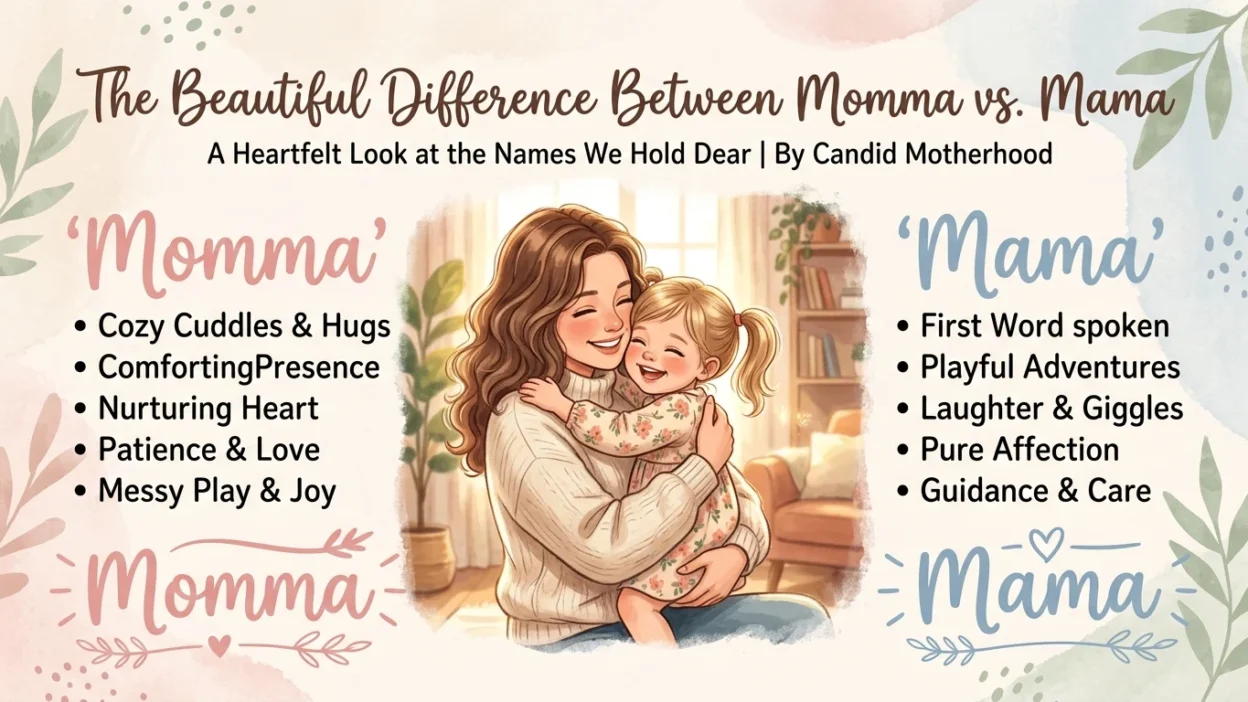
The short answer: both “momma” and “mama” are correct, but they differ slightly in usage, tone, and regional preference. This guide will help you understand momma vs mama, when to use each, examples, and common mistakes.
Quick Answer: Momma or Mama
- Mama ✅ Standard, widely accepted spelling
- Momma ✅ Informal variation (less standard)
- Both mean mother, used affectionately
- Mama is more common globally
Example:
- I love you, Mama.
- My momma makes the best food.
What Does “Mama” Mean?
Mama is a common, standard, and widely accepted word for mother. It’s often used by children, in emotional expressions, and across many cultures.
You’ll hear mama in:
- Everyday speech
- Songs and literature
- Family conversations
- Many languages worldwide
Examples of “Mama” in Sentences
- I miss you, Mama.
- My mama always supports me.
- The baby called out “Mama.”
- She is a proud mama.
- Mama knows best.
Mama feels natural, warm, and universal.
When to Use “Mama”
Use mama when:
- Writing generally or globally
- Speaking affectionately
- Referring to motherhood
- Keeping language simple and standard
Think: Mama = standard and universal
What Does “Momma” Mean?
Momma is a more informal and regional variation of mama. It’s often used in American English, especially in Southern dialects, to express warmth and closeness.
Examples of “Momma” in Sentences
- My momma taught me everything I know.
- Don’t worry, momma’s here.
- His momma is very kind.
- I called my momma yesterday.
- That’s my momma!
Momma often feels more personal, emotional, and conversational.
When to Use “Momma”
Use momma when:
- Writing informally
- Reflecting a specific dialect or voice
- Adding emotional or cultural tone
- Writing dialogue or storytelling
Think: Momma = informal and expressive
Momma vs Mama: Side-by-Side Comparison
| Feature | Mama | Momma |
|---|---|---|
| Correct spelling | ✅ Yes | ✅ Yes |
| Formality | More standard | More informal |
| Usage | Global | Regional (especially US) |
| Tone | Neutral, warm | Emotional, personal |
| Frequency | More common | Less common |
| Example | I love you, mama | I love you, momma |
Key Difference in Tone
While both words mean the same thing, the difference is mainly tone and style.
- Mama → neutral, widely accepted
- Momma → more emotional, regional, and expressive
Example:
- “I love you, mama.” (simple, universal)
- “I love you, momma.” (more personal, heartfelt tone)
Common Mistakes People Make
Mistake 1: Thinking One Is Wrong
Both are correct the choice depends on tone and context.
Mistake 2: Using “Momma” in Formal Writing
Less appropriate: The report mentioned the role of momma.
Better: The report mentioned the role of mama or mother.
Mistake 3: Overthinking the Choice
In casual writing, either works. Just choose based on tone.
American vs British English
- Mama is used in both American and British English
- Momma is more common in American English, especially informal speech
- British English tends to prefer mum or mummy
Cultural and Emotional Use
Both mama and momma are often used to express:
- Love
- Comfort
- Care
- Family connection
They’re also common in:
- Songs
- Movies
- Social media
- Baby talk
Similar Words You Might See
- Mom
- Mother
- Mommy
- Mum
- Mummy
- Ma
Each has different levels of formality and regional use.
Frequently Asked Questions
Is momma or mama correct?
Both are correct, but mama is more standard.
Which is more common?
Mama is more widely used globally.
Is momma informal?
Yes. It’s more informal and expressive.
Can I use momma in writing?
Yes, but mainly in informal or creative writing.
Is mama formal?
It’s not formal, but more standard than “momma.”
What is used in British English?
British English prefers mum or mummy.
Which sounds more emotional?
Momma often sounds more emotional.
Can I use both interchangeably?
Yes, in casual contexts.
Summary:
The difference between momma or mama comes down to tone and usage. Both words mean “mother” and are correct, but mama is more standard and widely accepted across different regions and contexts. Momma, on the other hand, is more informal, emotional, and often used in American English, especially in personal or conversational settings.
When writing, choose mama for a more neutral and universal tone. Use momma when you want to add warmth, personality, or a regional voice. Understanding this small difference helps your writing feel more natural and intentional.
Actionable takeaway:
Use mama for standard, general writing. Use momma for informal, emotional, or expressive tone.